Matthew R. “Matt” Hamel is a candidate for Chesapeake Commonwealth’s Attorney. He is running as a Democrat. His name will appear on the November 4, 2025 General Election ballot. Hamel, the incumbent, is running against Republican challenger David A. Mick.
The first day to vote early at your local voter registration office or satellite voting location for the Nov. 4 General Election is Sept. 19. Find your local office at this link. On Election Day, polls are open in Virginia from 6 a.m. until 7 p.m. Click here to see who is on your ballot.
10 On Your Side reached out to all of the candidates running in this race, with a request for a bio and a list of questions to answer. The bio is unedited; this is what the candidate submitted. If you do not see the candidate listed with a profile, we did not receive one.
Name: Matthew R. “Matt” Hamel
Age: 51
Website: https://www.matt-hamel.com/
Party: Democrat
Biography
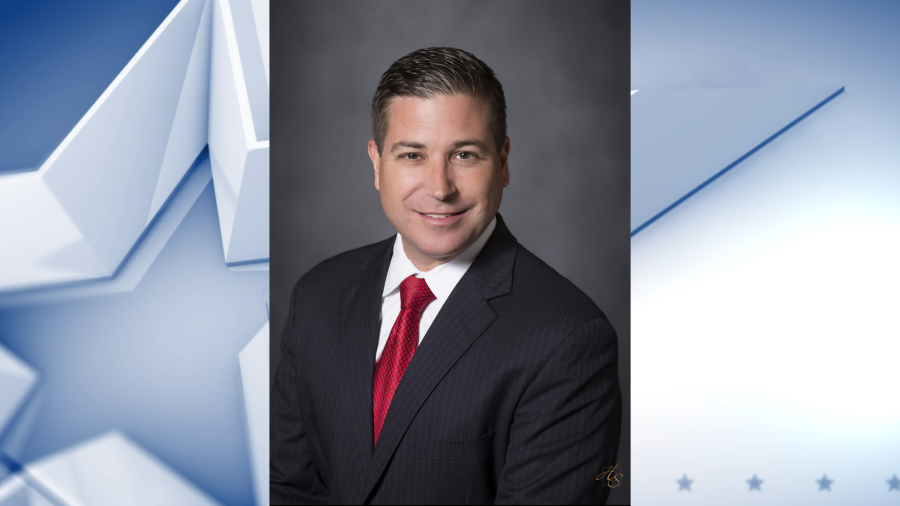
Matt Hamel was elected Commonwealth’s Attorney for the city of Chesapeake for a 4-year term commencing January 1st, 2022. Prior to his election as Chesapeake’s chief prosecutor, Mr. Hamel served on the Chesapeake City Council from 2018 through 2021. Mr. Hamel is an eyewitness to the September 11th attacks. At that time, he was working for a commercial bank in the World Financial Center in New York City. His building was attached to the North Tower of the World Trade Center via an above-ground walkway. This day changed his life. At the time, he was going to law school at night and had plans to continue working in the financial sector. Watching dozens of people jump to their death was the main reason why he changed course and joined the Navy. It was the Navy that brought him and his family to Chesapeake more 20 years ago. Mr. Hamel served as a Navy JAG attorney and prosecutor in the Navy’s busiest litigation office, as a Special Assistant U.S. Attorney, as well as a Staff Judge Advocate to several Commands and Staffs. He also volunteered for deployment to Iraq during the surge (2007-2008) and served inside a Detention Facility in Baghdad where he was responsible for the parole style review boards of the Multi-National Force Review Committee and the review of the high value (Deck of Cards) Detainees. Mr. Hamel transitioned to the Navy Reserves in 2011 and founded a law firm that served military service-members and spouses in domestic relations and criminal matters. Mr. Hamel is a Commander in the Navy Reserves and continues to serve as a Reservist JAG Attorney. His military decorations include the Meritorious Service Medal, the Joint Service Commendation Medal, the Navy and Marine Corps Commendation Medal (5 awards), the Navy and Marine Corps Achievement Medal (3 awards), the Iraq Campaign Medal, the Expert Pistol Shot Medal and numerous unit and service awards. Mr. Hamel served on the Board of Directors for Hampton Roads Transit (HRT) and the YMCA. He is a life member of VFW Post 2894. Mr. Hamel received his undergraduate degree from the College of the Holy Cross in Worcester, Massachusetts and his Juris Doctorate from Rutgers University School of Law. He is a licensed attorney in three states (Virginia, New Jersey and Pennsylvania).
If you are elected, what will be your top priority in office?
I will continue to expand community-based prosecutions, diversionary programs for nonviolent offenders, and community outreach. Since taking office in 2022, I created an Elder Abuse Task Force that brings together local and federal law enforcement, private business, mental health and hospital representatives, Chesapeake stakeholders and charitable organizations to discuss and provide resources to victims of financial exploitation. Importantly, our task force can provide much-needed – and swift – support and resources for victims and caretakers that the criminal justice system cannot immediately provide. I have also strengthened our support of retail establishments to promote economic growth in our community. Our prosecutors meet routinely with local merchants to learn about trends to combat shoplifting, and we utilize these relationships to garner even more effective evidence for trials of the perpetrators. Often the businesses have resources that local law enforcement lacks to identify and track repeat offenders, and our cases are stronger because of the relationships we have built with the business community. I am most proud that I have also put an emphasis on diversionary programs such as Recovery (Drug) Court and Behavioral Health Court. We still put a premium on punishment, but we are also committed to getting non-violent offenders the assistance they need when the root cause of their criminal behavior is addiction or mental health disorders. I will also continue the key community outreach programs I have initiated with partners like Buffalow Family & Friends and even the Norfolk Tides. The key component of seeking justice in all the cases we handle is obtaining much needed resources from existing and new funding sources.
What is the most important change the General Assembly should make to the criminal justice system?
In two words, increase resources. Following a vote by the General Assembly that did away with jury sentencing, our criminal justice system is inadequately funded to handle the number of jury trials. As it stands today, our courts struggle with finding the space and enough personnel to accommodate the increase in jury trials. . . nor are there enough resources for diversionary programs for treatment. Chesapeake has the second-largest Recovery Court and Behavioral Health Court in Virginia, but we could help reduce recidivism by placing more non-violent offenders into these programs. Doing so would require adequate resources for Chesapeake Integrated Behavioral Health and Probation & Parole so these programs can be better-administered. At the same time, our Police Department is underfunded and could benefit from additional resources for the tools and staffing they need. Finally, an increase in (human) resources would enhance retaining Chesapeake’s nearly 30 excellent prosecutors, much less those we wish to attract and recruit.
What is your philosophy on plea agreements? Are there cases when you think they are not appropriate?
Given the sheer number of cases any prosecutor’s office in the Commonwealth must litigate – and judicial system’s resources – plea agreements are a practical necessity. When I took office, we had 7,000 backlogged felonies due to the COVID court closure for over two years. On top of that, we indicted another 3,000 felonies in 2022 when Chesapeake’s Circuit Court had five courtrooms and five judges. So the math isn’t difficult. From a philosophical perspective, plea agreements must balance the need to seek justice with preserving a defendant’s constitutional rights. That said, I don’t believe plea agreements are generally appropriate for domestic violence and DUI cases. Yet there will always be exceptions to a bright-line rule when the evidence, victim or justice requires it. Still, we will never offer a plea agreement in any case that does not reflect a fair and just outcome.