The video above is WAVY’s in-depth interviews with both candidates for Virginia governor, from July.
Abigail Spanberger is a candidate for Virginia Governor and is running as a Democrat. Her name will appear on the November 4, 2025 General Election ballot. Spanberger is running against Republican candidate, Winsome Earle-Sears.
The first day to vote early at your local voter registration office or satellite voting location for the Nov. 4 General Election is Sept. 19. Find your local office at this link. On Election Day, polls are open in Virginia from 6 a.m. until 7 p.m. Click here to see who is on your ballot.
10 On Your Side also reached out to Earle-Sears with a request for a bio and a list of questions to answer, but did not receive a response.
The bio and answers below are unedited; this is what the candidate submitted.
Name: Abigail Spanberger
Age: 46
Website: https://abigailspanberger.com/
Party: Democratic
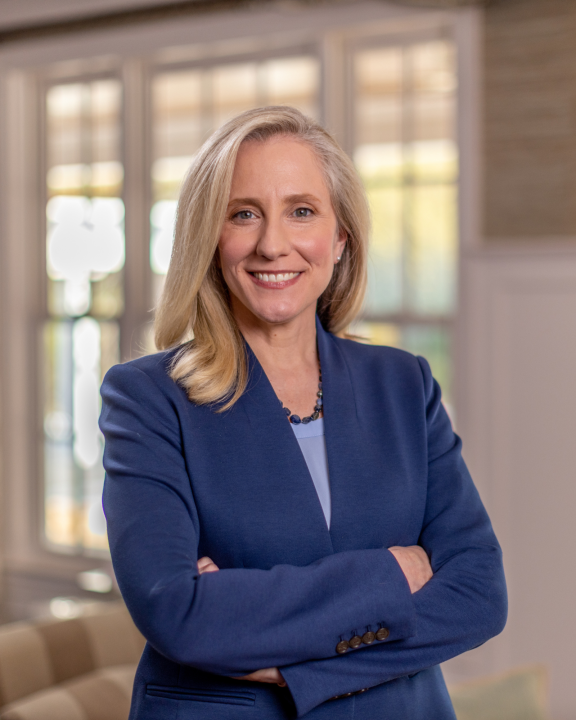
Biography
Abigail Spanberger is the Democratic nominee to serve as the next Governor of Virginia. She represented Virginia’s Seventh Congressional District in the U.S. House for three terms, ending her service in January 2025. Abigail began her career of public service as a federal law enforcement officer — working money laundering and narcotics cases. Abigail then joined the CIA, where she worked undercover her entire time at the Agency as a case officer. Both at home and abroad, she collected intelligence, managed assets, and oversaw high-profile programs to combat terrorism. In 2018, Abigail became the first Democrat since 1968 — and the first woman ever — to be elected to serve the Seventh District in Congress. She served on the House Intelligence Committee, the House Foreign Affairs Committee, and the House Agriculture Committee. Abigail grew up in Henrico County, Virginia. Her father is a U.S. Army Veteran and served as a career law enforcement officer. Her mom was a nurse who worked long shifts on nights and weekends. Abigail attended J.R. Tucker High School and is a graduate of the University of Virginia. She and her husband Adam are the proud parents of three school-aged daughters.
Why are you running for this office?
I’m running for Governor because I love Virginia. I went to school here. I married my husband, Adam, here. And now Adam and I are raising our three daughters here, where we both grew up.
Virginians deserve a Governor who is focused on addressing the real challenges facing our families and communities. As Virginia’s next Governor, I will be focused on making Virginia more affordable, protecting Virginia jobs, keeping Virginia’s communities safe, making Virginia’s schools the best in the country, and standing up for Virginians’ fundamental rights. Earlier this year, I rolled out my “Affordable Virginia Plan,” which is focused on lowering healthcare and prescription drug costs, housing costs, and energy costs, because I hear from Virginians across every corner of our Commonwealth who are being squeezed by high prices. My “Growing Virginia Plan” focuses on growing Virginia’s economy and creating job opportunities for Virginians across every corner of the Commonwealth — because Virginians deserve a Governor who will not casually dismiss threats to our economy, but focus on growing it. My “Strengthening Virginia Schools Plan” focuses on making sure Virginia’s public schools are the best in the country, boosting workforce training opportunities, and taking real action to recruit and retain high-quality teachers — while bringing parents, educators, and administrators to the table.
I am running for Governor because I believe we are better — and that Virginians deserve better — than the chaos we see on TV. While the Trump Administration and Republicans in Congress are threatening Virginians’ jobs, financial security, and healthcare coverage, our statewide leaders are putting allegiance to their political party ahead of the health, safety, and financial security of every Virginian in our Commonwealth. As Virginia’s next Governor, I will always put Virginians first.
Why are you qualified to hold this office?
I’m focused on getting things done, not grandstanding. As a Member of Congress representing Virginia’s Seventh District, I built a reputation of working with everyone — both Democrats and Republicans at the federal, state, and local level — to find common ground. I led bipartisan bills to crack down on fentanyl trafficking and protect Virginians’ retirement benefits that were signed into law by both President Trump and President Biden. I voted to pass bipartisan legislation to expand healthcare benefits for Virginia’s Veterans and helped lead the charge to deliver billions of dollars of physical infrastructure investments to Virginia’s communities.
As a former federal law enforcement officer who investigated child predators and arrested narcotics traffickers, I understand the threats that exist to the safety of Virginia’s communities. As a former CIA case officer who worked counterrorism cases and tracked transnational criminal organizations, I served a mission to protect and serve the American people. In both of these roles, I didn’t have time for nonsense — because we had to put the mission first.
As Virginia’s next Governor, I will bring these experiences to Richmond. As I always have, I will work in a bipartisan way to get things done for Virginia. I will listen to Virginians’ top-of-mind concerns and be clear-eyed about the threats facing our Commonwealth. As Governor, I will be laser-focused on making Virginia more affordable for Virginians, growing Virginia’s economy, and protecting Virginians’ jobs.
Would you propose eliminating the car tax? How would you accomplish this?
It’s no secret that the car tax is the most hated tax in Virginia. My husband actually wrote a high school paper about the car tax — so I promise I hear about this tax a lot, both at home and on the campaign trail. For years, politicians in Richmond have promised to eliminate this most hated tax in Virginia, but the only results Virginians have seen are gimmicks and empty promises. As the next Governor of Virginia, I will work with anyone — Democrat or Republican — who is serious about putting Virginia on a real path toward eliminating the car tax. Actually getting this done means understanding how we make up lost revenue that localities currently rely on to support local law enforcement and EMS, physical infrastructure improvements, stronger schools, and other local services. It will take serious leaders to find a real, sustainable solution to eliminate the car tax — but progress begins by taking the first step.
Do you believe Virginia should keep its Right to Work law?
Virginia’s workforce and economy are facing extraordinary challenges at this moment — from unprecedented attacks on the federal workforce that impact hundreds of thousands of Virginians and our larger economy to tariffs and the market instability and increased costs they create. As Virginia’s next Governor, I will work to create stability in our economy and provide certainty to workers and businesses. Accordingly, I would not support a full repeal of Virginia’s right-to-work law.
I do support an array of policy initiatives that would meaningfully impact the lives of working Virginians — such as expanding apprenticeship programs and strengthening workforce training, raising the minimum wage to $15 dollars per hour, improving workplace safety standards, improving enforcement of existing labor laws, and establishing a paid family and medical leave program.
If a locality governing body votes unanimously to change its charter, would you sign the law?
As it relates to matters of local governance, my general principle as Governor would be to defer to localities.
How would you work with those who disagree with you?
When I was first elected to Congress in 2018, I was the first Democrat elected to serve Virginia’s Seventh District in 50 years. I won that first election by listening to Virginians across the political spectrum, understanding how they approach the issues that matter most to them, and finding common ground. I brought that same ethos to the halls of Congress, where I would have conversations with colleagues on both sides of the aisle. Some of these conversations revealed that even if a colleague and I didn’t come to a conclusion for the same reasons, we could sometimes get there — and we could work together to move a solution forward. That’s why I was consistently ranked the most bipartisan Member of Congress from Virginia.
And as Governor of Virginia, I will take this same approach to governing. I will be a leader for all Virginians — whether they voted for me or not. I know that I cannot be an effective leader for all Virginians unless I bring all Virginians’ voices to the decision-making table — so that’s exactly what I will do.
What policy of the opposing party do you agree with?
I appreciate that Governor Youngkin has worked with our General Assembly to move Virginia toward our clean energy future. Our Governor has taken a bipartisan approach around nuclear energy — embracing the development, testing, and deployment of small modular nuclear reactors in Virginia, and working to bring the world’s first grid-scale commercial fusion power plant to Virginia. Governor Youngkin has also taken steps to encourage the development of offshore wind projects in Virginia — including our nation-leading project off the coast of Virginia Beach.
As Governor, I believe that Virginia needs a clear, statewide vision for the Commonwealth’s energy future, so that we can be a nationwide leader in the cutting-edge technologies of the next 10, 20, and even 100 years. Virginia can and should lead the way.
Additionally, we need to make sure ratepayers aren’t seeing higher and higher energy bills. That’s why my “Affordable Virginia Plan” is focused on making Virginia more energy independent, including by increasing local generation and focusing on energy sources with low or no fuel costs — like offshore wind, nuclear, and solar — to lower prices and minimize price volatility. I am focused on putting Virginia on the path towards long-term, sustainable energy independence, and I appreciate the steps that both Democrats and Republicans have taken to move us towards this end goal.