The month of September is here and that means the official start of fall is right around the corner. With the start of the fall season comes shorter days, but just how much shorter?
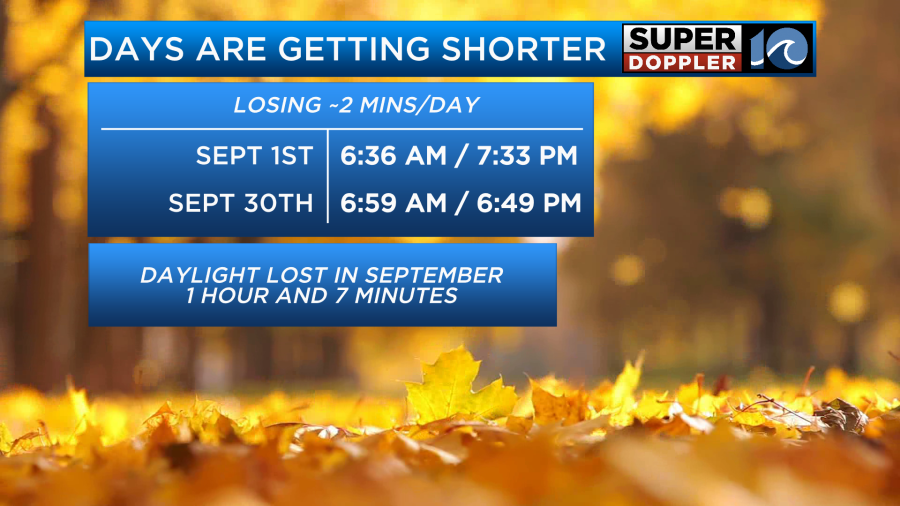
Throughout September, we lose roughly 2 minutes of daylight per day which comes out to 1 hour and 7 minutes lost by September 30th.
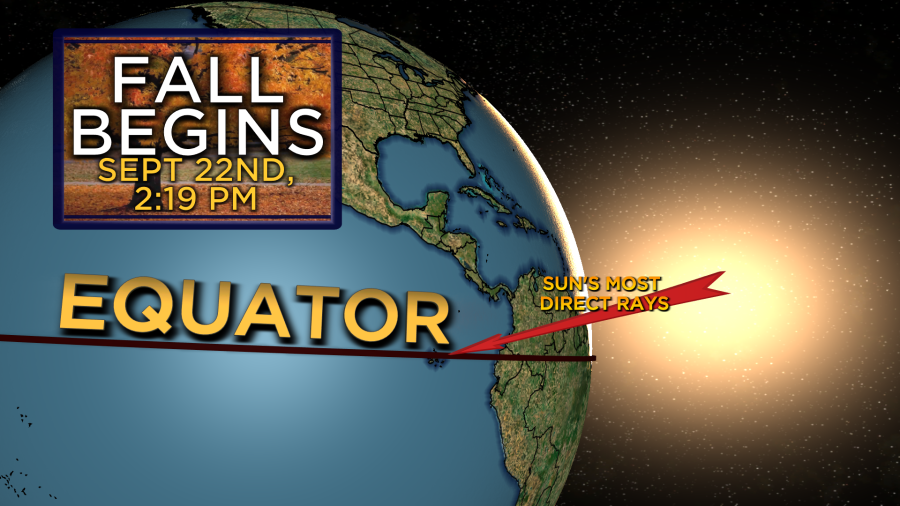
This shortening process accelerates as we approach the autumn equinox which is when the suns rays are cast perpendicular to the equator allowing for almost equal day and equal night. It is not until a few days after the equinox when we get an equal day and equal night due to the fact that the sun is a disk and not a singular point in the sky. Additionally, the light bending around Earth’s atmosphere also delays that timing.

This year, the equinox occurs on September 22nd which is the official start of fall. However, in order to adjust for the loss of daylight during this season, changes to our clocks must be made.
On November 2nd, daylight saving time comes to an end and this year, it will occur the second earliest that it is able to occur.
By changing the clocks back an hour, we allow for more sunshine during the morning hours which is good for our overall health and safer for kids going to school in the morning. On the other hand, this means an earlier sunset which has been linked to seasonal depression.
Our days will continue to get shorter up until the winter solstice in December which marks the shortest day of the year.